By the 1920s the Indian movement against British rule contained several distinct strands, and they disagreed with each other as much as they agreed.
The constitutional strand worked through the Indian National Congress and, after 1919, through the partly elected legislatures the colonial government had created. Its instrument was pressure: resolutions, elections, negotiation, and the slow expansion of Indian participation in government.
The mass non-violent strand, associated above all with Gandhi, rejected both violence and quiet negotiation in favour of disciplined, public, deliberately illegal non-cooperation — boycott, picketing, refusal of taxes, and voluntary imprisonment in very large numbers.
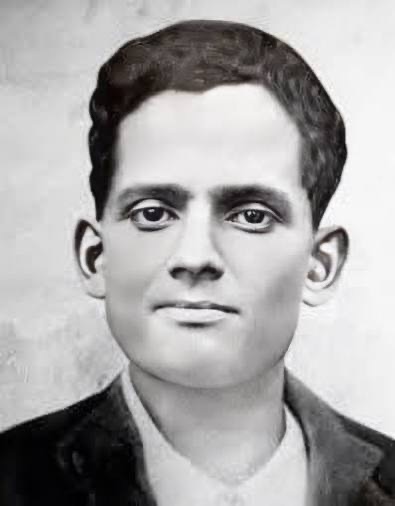
The revolutionary strand — the one Das belonged to — held that a colonial state which governed by force would not be argued out of power, and organised in secret. Its members were mostly young, mostly students or recent students, and drawn disproportionately from Bengal, Punjab and the United Provinces. Colonial law classified them as terrorists; they described themselves as revolutionaries fighting a war of national liberation.
The differences were not only about tactics. By the late 1920s the younger revolutionaries had become explicitly socialist. When the Hindustan Republican Association was reorganised in 1928 it added the word to its name, becoming the Hindustan Socialist Republican Association, and its programme extended past independence to the reorganisation of Indian society itself.
It is important to be precise about what these organisations did and did not do, because a great deal of loose writing surrounds them. They were small. They were repeatedly broken up by arrests, informers and conspiracy trials. They had no mass following, and their leaders knew it: much of what they did was intended to be heard rather than to be militarily effective — acts designed, in Bhagat Singh's phrase at his trial, to make the deaf hear.
This archive describes these organisations historically. It does not describe how any of their activities were carried out, and no operational detail of any kind appears on this site. The subject here is a political conflict and a young man's part in it, not a set of methods.