Born in Calcutta
Jatindra Nath Das is born in Calcutta, in the Bengal Presidency, to Bankim Behari Das and Suhasini Debi. His mother dies when he is nine years old.
The Archive of 63 Days
1904 — 1929
A life remembered through 63 days of resistance.

Jatindra Nath Das — known to his contemporaries as Jatin Das — was twenty-four years old when he died in a Lahore prison on 13 September 1929, on the sixty-third day of a hunger strike. He was not fasting for his own freedom. He was fasting so that Indians imprisoned for political offences would be treated as political prisoners rather than as ordinary convicts.
That sentence is how most people in India first encounter him, and it is also the reason he is so often reduced to it. Before Lahore there was a whole life, short but densely lived. He was born in Calcutta in 1904 and lost his mother when he was nine. He passed his Matriculation in the first division in 1921 and, that same year, at seventeen, joined the Non-Cooperation Movement, was convicted for picketing shops selling imported cloth in the Burrabazar quarter of the city, and served a term in Hooghly Jail. He returned to his studies, enrolled at South Suburban College — today Ashutosh College — in 1922, passed his Intermediate in the first division in 1924, and was reading for a B.A. at Vidyasagar College when he was arrested again.
Between those two arrests he did the ordinary work of a politically serious student of his generation: relief work during floods in north Bengal, and membership of the Anushilan Samiti, one of the oldest of Bengal's revolutionary societies. In November 1925 he was detained without a completed trial and sent to Mymensingh Central Jail. There, protesting the treatment of political prisoners, he went on hunger strike for the first time. He was nineteen. The fast lasted about three weeks; the Jail Superintendent apologised, and he broke it. He was moved to Dacca Central Jail and afterwards to Mianwali Jail in the Punjab, and released at the end of October 1928.
He was free for roughly seven months. In that period he became associated with the Hindustan Socialist Republican Association, the organisation of Bhagat Singh, Sukhdev, Chandrashekhar Azad and Batukeshwar Dutt; he is recorded as having learned the technical side of that work from the veteran revolutionary Sachindra Nath Sanyal. On 14 June 1929 he was arrested and taken to Lahore, to be tried under the supplementary proceedings of what became known as the Lahore Conspiracy Case.
He never came out. On 13 July 1929 he joined a hunger strike that Bhagat Singh and Batukeshwar Dutt had begun a month earlier, over the conditions in which Indian political prisoners were held. Sixty-three days later he was dead. His body was carried by train from Lahore to Calcutta, and the crowds that met it at station after station turned a prison protest into a national event.
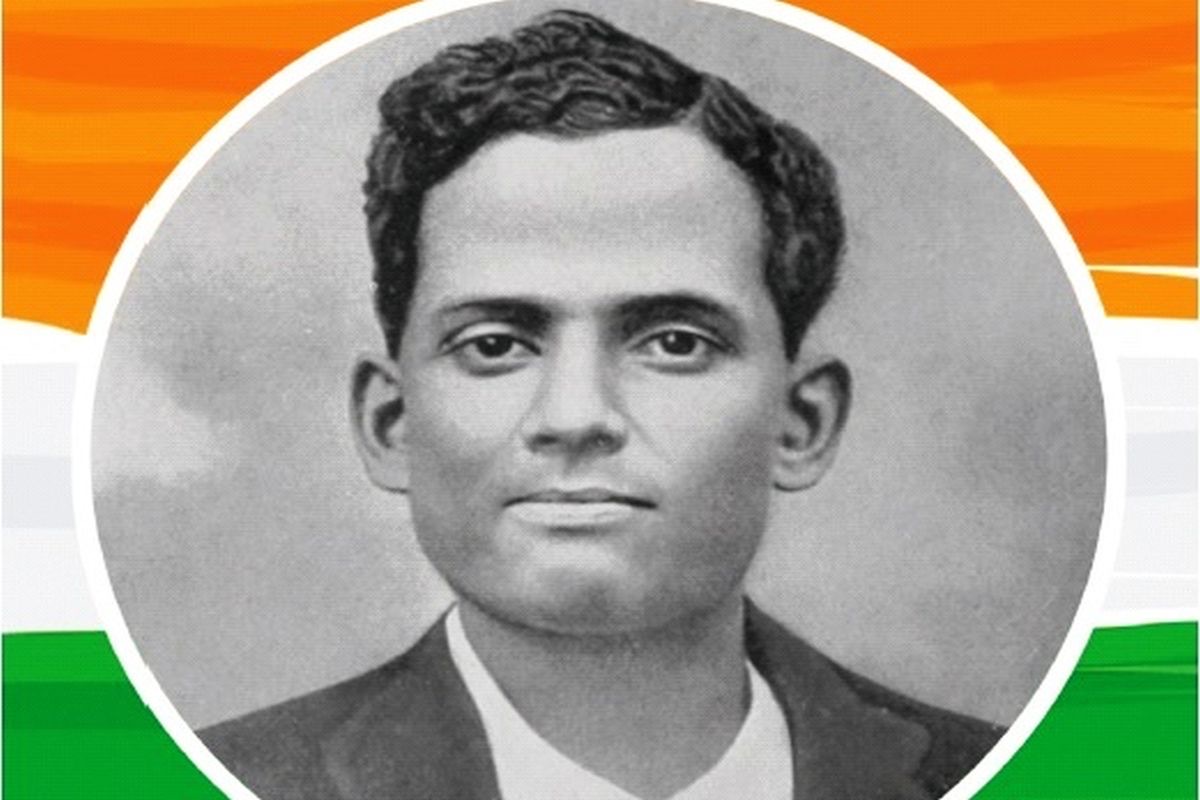
He was, first, a student — and he remained one in the middle of everything else. The colleges in his record are ordinary Calcutta institutions, and the marks are good: first division at Matriculation in 1921, first division at Intermediate in 1924. His B.A. was never finished, because in November 1925 the colonial state removed him from the room where he was studying for it.
He was, second, someone who had learned early what a prison was and what it did to people. By the time he reached Lahore in 1929 he had been held in Hooghly, Mymensingh, Dacca and Mianwali. That is an unusual amount of prison experience for a man of twenty-four, and it matters: the demands he ultimately died for were not abstractions to him. He had eaten the food, worn the clothing and watched the treatment he was asking to have changed.
He was, third, a revolutionary in the specific Indian sense of the 1920s — a member of clandestine organisations that rejected both colonial rule and the strictly constitutional path, and that were, by 1928, increasingly socialist in their language. Membership of the Anushilan Samiti placed him in the older Bengali tradition; association with the HSRA placed him in the newer all-India one.
And he was, finally, someone whose most consequential act was one of refusal rather than of force. The thing he is remembered for required no weapon at all.
Only events with a documented date appear on this line. The gaps between them are real gaps in the record, not omissions of convenience.
Jatindra Nath Das is born in Calcutta, in the Bengal Presidency, to Bankim Behari Das and Suhasini Debi. His mother dies when he is nine years old.
He passes his Matriculation in the first division. In the same year he joins the Non-Cooperation Movement, is convicted for picketing shops selling foreign cloth in Burrabazar, and is imprisoned in Hooghly Jail. He is seventeen.
He enrols at South Suburban College, now Ashutosh College, and passes the Intermediate examination in the first division in 1924. During these college years he takes part in flood relief work in north Bengal.
While studying for his B.A. at Vidyasagar College, Calcutta, he is arrested for his political activities and imprisoned in Mymensingh Central Jail. He is a member of the Anushilan Samiti.
In Mymensingh he fasts in protest at the treatment of political prisoners. Accounts give the length as twenty or twenty-one days; they agree that the Jail Superintendent apologised and that Das then broke the fast. He is subsequently transferred to Dacca Central Jail and then to Mianwali Jail in the Punjab.
He is released after roughly three years of detention. Over the following months he becomes associated with the Hindustan Socialist Republican Association.
He is arrested in connection with the Lahore Conspiracy Case and imprisoned in Lahore to face the supplementary proceedings. The charge concerns the manufacture of explosives for the HSRA, including the bomb thrown in the Central Legislative Assembly in Delhi on 8 April 1929 by Bhagat Singh and Batukeshwar Dutt.
Das joins the hunger strike begun on 15 June by Bhagat Singh and Batukeshwar Dutt over the conditions of Indian political prisoners. Counted from this date, his fast runs exactly sixty-three days.
Jatindra Nath Das dies in prison in Lahore, in the presence of his younger brother Kiron. He is twenty-four years old. His body is taken by train to Calcutta, where it is received at Howrah station and carried in procession to the cremation ground.
Days · 13 July – 13 September 1929
The hunger strike in the Lahore jails was not begun by Jatin Das. It was begun on 15 June 1929 by Bhagat Singh and Batukeshwar Dutt, who had been convicted after the Assembly bombing, and it was taken up over the following weeks by the men awaiting trial in the Lahore Conspiracy Case. Das joined it on 13 July 1929. Counted from that day, 13 September 1929 is day sixty-three.
The demands were about status and treatment, not release. Political prisoners wanted to be classified as a distinct category; to be held together rather than dispersed among convicts; to be exempt from the hard and degrading labour assigned to ordinary prisoners; to receive food and clothing fit to live in; and to be allowed books, writing materials and a daily newspaper. In a restatement of the same demands issued in January 1930, the prisoners argued that motive should be “the most important factor in the criteria for classification”.
The colonial administration's answer was force-feeding. Accounts of Das's case record that the attempts to feed him by force injured his lungs and left him seriously ill. As his condition worsened, the jail authorities are recorded as having recommended his unconditional release; the government declined and offered release on bail instead, which was refused. A medical note of 12 September 1929 recorded fever and a pulse of 130.
He died the next day. The strike he had joined continued after him and is generally described as having run 116 days in all. Within months the government appointed a jail enquiry committee in the Punjab, and in the Central Legislative Assembly Motilal Nehru's censure motion over the treatment of the Lahore prisoners was carried by 55 votes to 47.
On the two start dates
Some accounts date the Lahore hunger strike from 15 June 1929 and still describe Das's fast as 63 days. The two cannot both be right: 15 June to 13 September is 91 days. 13 July to 13 September is exactly 63. This archive therefore treats 15 June as the start of the strike as a whole and 13 July as the day Jatin Das joined it.
Memory
Nine chapters follow: a childhood in Calcutta, a political education, a conspiracy trial in Lahore, sixty-three days of refusal, and the long afterlife of a single decision.
Enter the archive